







Características
Our Super Intensive Spanish Course in Argentina is the fastest and most demanding way to improve your Spanish in a short period of time. This program combines our Intensive Group Course with daily one-to-one classes, offering highly focused guidance and immediate feedback to maximize progress.
The course is intentionally very intensive and involves a full-time workload of 30 hours per week: four hours of group classes in the morning, followed by two hours of individual instruction in the afternoon, from Monday to Friday. Because of the cognitive effort required, we do not recommend exceeding six hours of classes per day. We advise students to take this course for no more than two to three weeks. Language learning at this intensity requires time to process, consolidate, and apply new information effectively.
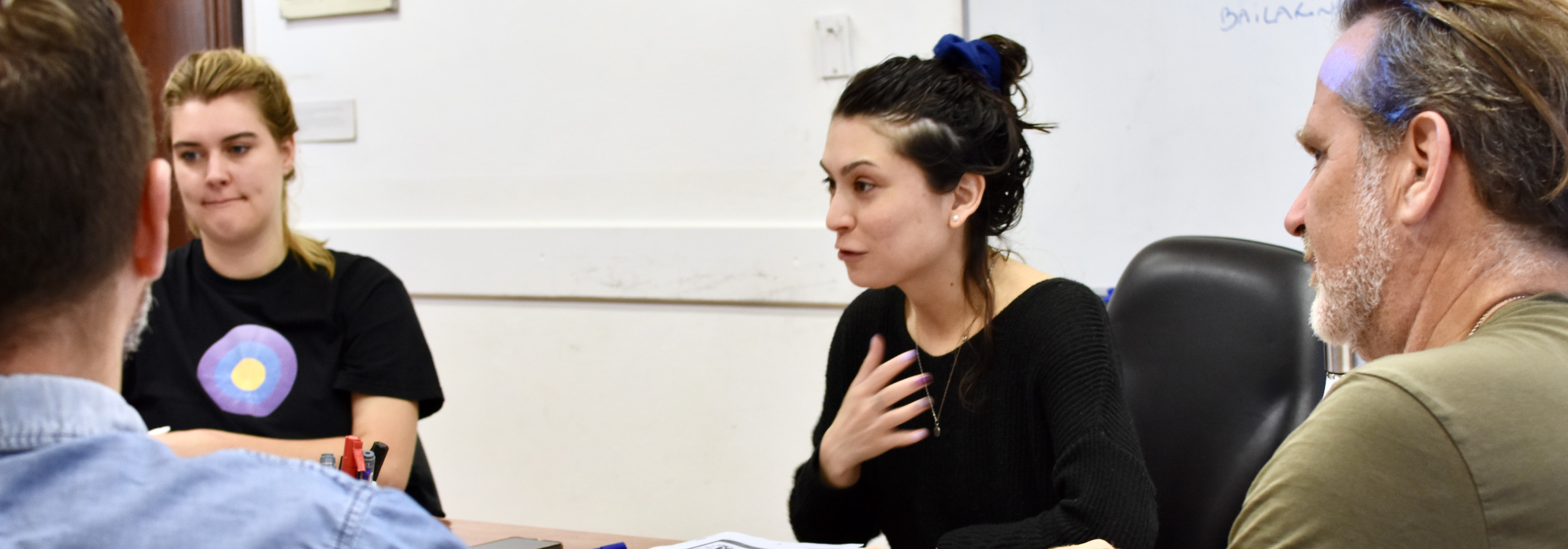
We place strong emphasis on active communication. We constantly encourage students to put newly learned grammar and structures into practice through discussions, debates, and guided conversation activities. Particular attention is given to the Spanish spoken in BuenosAires, allowing students to develop fluency and confidence in authentic, real-life contexts. Thanks to the combination of structured group learning and personalized individual mentoring, students experience rapid and measurable improvement. The Super Intensive Course is ideal for learners with limited time, clear objectives, and the motivation to fully engage in an immersive and demanding learning experience.
If you are interested in this course for German "Bildungsurlaub" please check the German version of this course.
- Level assessment (oral and written) before starting
- Study materials (textbooks and other resources)
- Access to the online platform up to level intermediate B1 if requested
- Optional exams at the end of each level and at the end of your stay
- Certificate stating the number of hours completed and level attained (including grade if the exam is passed)
- Two to three extracurricular activities per week (guided tours, museum visits, tango, workshops, excursions, etc.)
- Wi-Fi access
- Hot and cold beverages
- Access to the library
- Movie screenings and discussions (usually once a week)
- Assistance with organizing trips around Uruguay and Latin America
- 24-hour hotline available in Spanish, English, French, and German
Student Stories



Frequently Asked Questions
Yes. Buenos Aires is one of the best places in the world to study Spanish, combining full language immersion with a rich cultural life, welcoming people, and a variety of Spanish that is widely understood across Latin America and beyond. Buenos Aires offers constant real-life practice. Locals are known for being open, expressive, and eager to talk—whether in cafés, neighborhoods, or social settings. The city’s cultural scene is vibrant and accessible: music, literature, film, food, and everyday street life all become part of your learning experience. From a linguistic perspective, Argentine Spanish—especially Rioplatense Spanish—functions much like the difference between British and American English: distinctive, but fully transferable. Students who learn Spanish in Buenos Aires can comfortably communicate throughout the Spanish-speaking world.
The Spanish spoken in Buenos Aires is known as Rioplatense Spanish, a regional variety used in Argentina and Uruguay, particularly around the Río de la Plata area. Rioplatense Spanish is characterized by a distinct pronunciation, including the use of vos instead of tú (voseo), and a noticeable pronunciation of the letters “ll” and “y,” which are often pronounced with a soft “sh” or “zh” sound. Its intonation reflects historical European immigration, giving the accent a recognizable rhythm. Despite these features, its grammar and core vocabulary follow standard Spanish norms and are widely understood. For learners, this means studying Spanish in Buenos Aires offers exposure to a clearly identifiable regional accent while providing a solid and transferable foundation for communication across the Spanish-speaking world.
When choosing a Spanish school, pay close attention to class size, teaching quality, accreditation, and how personalized the learning experience is. These factors directly affect how much you speak, how fast you progress, and how supported you feel. Class size matters more than many people realize. A class with 8 students allows significantly more speaking time and individual feedback than one with 16, even if both are called “small groups.” Teacher quality and stability are also important: larger, well-established schools are often better able to attract and retain experienced teachers. Accreditation is another key indicator. Schools recognized by the Instituto Cervantes meet defined academic and organizational quality standards. Finally, flexibility matters: fast answers from real admin staff, the ability to change class levels without extra cost, and included cultural or extracurricular activities all contribute to a better learning experience.
Yes. Adults of all ages can successfully learn a new language. Experience consistently shows that motivation, consistency, and learning habits matter far more than age. Many students who come to Buenos Aires are highly motivated, with a genuine interest in the language, culture, and people. At our school, we welcome students of all ages—from teenagers to retired learners—and progress varies widely from person to person. Factors such as recent study experience, prior exposure to foreign languages, and awareness of how one’s own language works often matter more than age itself. While some older students may take a bit longer with certain aspects, others progress extremely fast. We’ve seen students in their 60s and 70s “outperform” much younger classmates thanks to focus, discipline, and motivation.
No. Classes are taught primarily in Spanish from day one. English is used only as a last resort, when absolutely necessary to clarify a specific point. Teachers are trained to make Spanish understandable through repetition, gestures, visual cues, simple structures, and gradual progression. This immersive approach helps students start thinking in Spanish instead of translating. Our experience supports this method. With more than 20,000 former students, learning in Spanish from the beginning has proven to build confidence faster and lead to stronger communication skills.
Yes. Many students travel to Argentina without speaking Spanish, and Buenos Aires is one of the easiest cities in Latin America to navigate in that situation. Argentina consistently ranks at the top of the region for English proficiency, especially in Buenos Aires, where English is commonly spoken in airports, hotels, cafés, and tourist services. A large number of our students arrive with little or no Spanish. We can arrange airport pickup, and host families are experienced in welcoming students who don’t yet speak the language. At the school, teachers and staff regularly work with absolute beginners and guide them step by step. Most students learn basic Spanish very quickly, and locals are generally friendly, patient, and willing to help—making daily life manageable from the start.
How fast you learn Spanish depends on your background, motivation, and how much you practice outside the classroom. Previous experience with foreign languages—especially Romance languages—can speed up progress, as can daily interaction with Spanish speakers through host families or social life. For beginners starting from zero, typical progress aligned with the Common European Framework of Reference for Languages (CEFR) looks like this: After 2–3 weeks: You can introduce yourself, ask basic questions, and handle simple daily interactions. After 2–3 months (around 200 hours): You can get around confidently, understand everyday Spanish, and communicate comfortably in common situations. After 5–6 months: Many students approach an independent level (around B1–B2), allowing them to function socially and even follow lectures related to their field of knowledge. Individual progress varies, but immersion in Buenos Aires often accelerates learning significantly.
Buenos Aires is generally more affordable than most cities in Europe and North America, although costs can vary depending on the economic situation. Some expenses, such as supermarket food, can be comparable to prices abroad. However, rent is usually lower, and everyday costs like public transportation and taxis are much cheaper. Going out, cultural activities, and social life are also more accessible, even if not inexpensive by local standards. For many foreign students, this balance makes Buenos Aires an attractive destination: a major international city where it’s possible to study Spanish and enjoy an active cultural life without the high costs of many other global capitals.